Subscribe to our Telegram channel!
Bitcoin mining is 50% powered by alternative energy sources

According to investor and ESG expert Daniel Betten, more than 56% of the electricity powering the Bitcoin network currently comes from sustainable, renewable sources, and this share is set to continue to grow as miners increasingly connect to green energy projects. In 2021, the share of green energy in BTC mining was only about 34%, but the latest data collected by Betten, Willie Wu, and the DARI research institute shows 56.7% by the end of 2025.
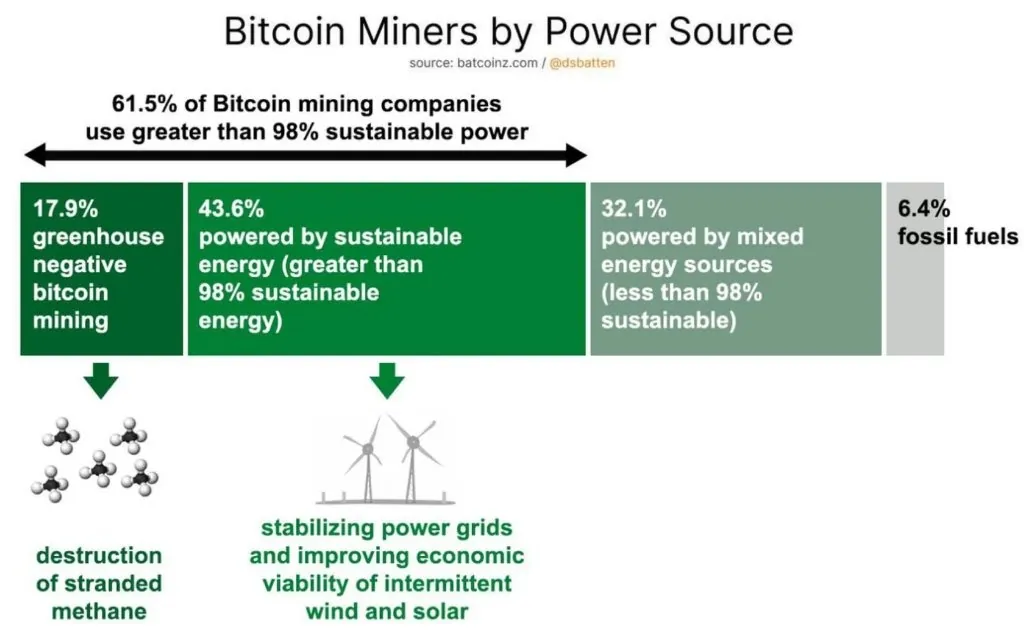
Batten argues that Bitcoin mining does not just use renewable energy, but can contribute to its development. He explains that miners act as immediate buyers of surplus renewable electricity, which often gets stuck in long queues for grid connection — sometimes up to 10−15 years. As a result, mining revenues can reduce the payback period of renewable energy projects from about 8 years to 3.5 years, making such investments more attractive.
In addition, mining facilities provide flexible demand that helps stabilize power grids with a high share of variable sources, such as solar and wind generation, giving grid operators the confidence to add new capacity.
Batten also emphasizes that mining can replace some of the fossil heat used for heating in many countries. According to him, about 50% of the world’s energy consumption is spent on heating, and the heat generated by mining farms can be used for useful purposes. He cited the example of the Finnish company MARA, which uses waste heat from mining to heat 80,000 residents, about 2% of the Finnish population. Similar solutions are used to heat houses and greenhouses, including solar energy in the Netherlands.
Another aspect is supporting research in the field of renewable energy. Batten noted that miners are helping to revive technologies, such as Ocean Thermal Energy Conversion (OTEC), which were previously postponed due to the high cost of connecting to the grid, by providing them with financial support.
Mining is also contributing to the electrification of remote areas: Gridless Compute projects are powering microgrids in Africa, providing electricity to about 8,000 households in Kenya, Malawi, and Zambia.
Another environmental contribution that Batten points to is the utilization of harmful methane emissions. Some companies use methane that would otherwise be flared at mining sites or in landfills to power mining facilities, thereby reducing overall emissions. In general, the negative impact of mining on carbon emissions has already reached about 7% of BTC’s network emissions, according to the expert.
Batten summarized that Bitcoin mining has become an important element in addressing at least four systemic barriers to climate progress, and noted that this is supported by both real-world data and specific application examples.