Subscribe to our Telegram channel!
Scientists discover that Venus could have had life before

A new study published in the journal Nature Astronomy proves that plate tectonics took place on the hottest planet in the Solar System in the distant past. Astrophysicists note that this process could have made Venus an optimal environment for the emergence and development of life, The New York Times reports.
The second planet from the Sun is the hottest environment in the solar system, with a temperature of 460 °C and sulfuric acid clouds floating in the atmosphere. However, scientists believe that at an early stage of its history, Venus experienced plate tectonics, which led to changes in the outer part of the planet’s crust. Scientists emphasize that the movement of lithospheric plates is a critical process for the emergence and development of life.
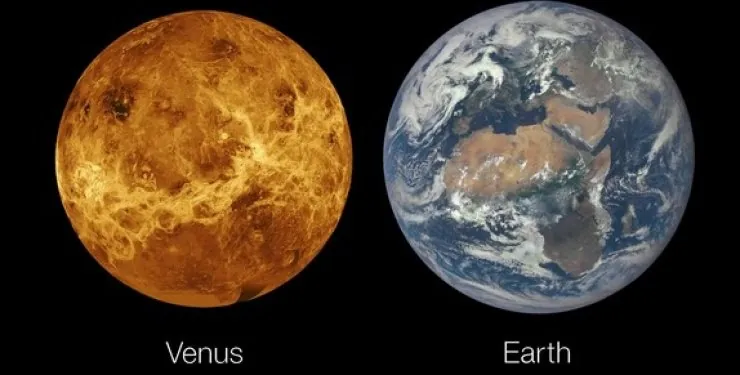
Researchers believe that plate tectonics on Venus occurred at about the same time as on the early Earth, about 4.5−3.5 billion years ago. In particular, chemical reactions resulting from plate tectonics could have removed most of the carbon dioxide that makes Venus uninhabitable today.
The new study confirms current theories that Venus was a cooler planet in the distant past, with liquid water on the surface. Scientists have concluded that microorganisms could have lived on Venus billions of years ago.
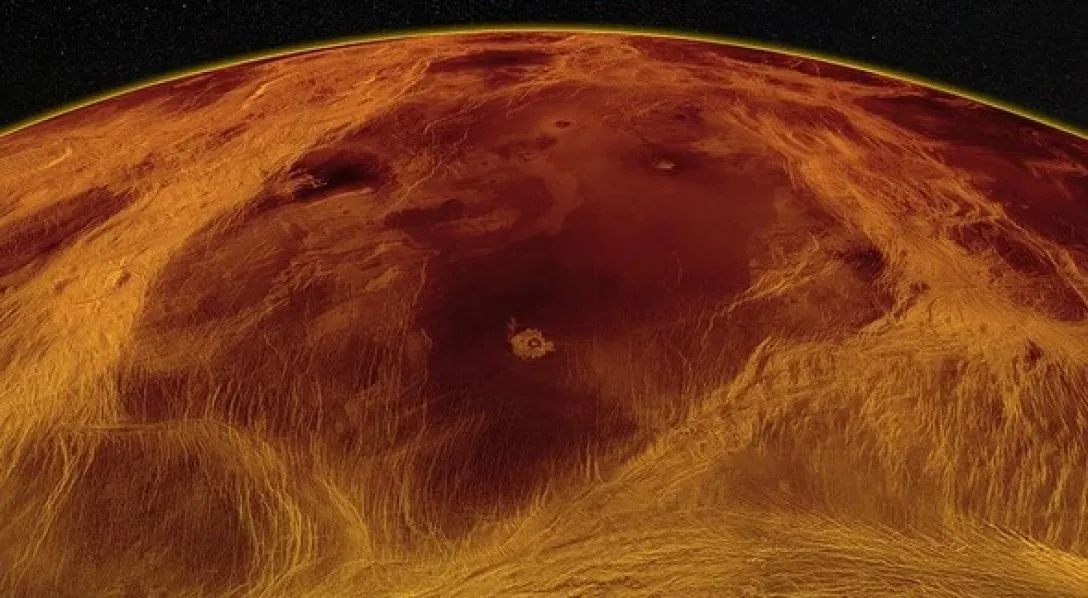
The scientists created a computer simulation that used two types of tectonic models. One model was the so-called stagnant lid, when the outer crust of the planet consists of a solid, immovable shell. In this case, most of the gases remain under the shell. The second model included plate tectonics.
The researchers explain that 80% of volcanic processes occur on Earth when lithospheric plates move in the place where they collide. This leads to the release of large amounts of gases into the atmosphere. If Venus had always had a fixed crustal shell, as it does now, then, according to the modeling, the level of observed nitrogen in the planet’s atmosphere would be much lower.
The authors of the study believe that Venus initially experienced active plate tectonics with the release of large amounts of carbon dioxide and nitrogen, and then the planet’s crust closed and no more plate movements occurred. Future missions of NASA and the European Space Agency are intended to confirm or refute scientific hypotheses.