Subscribe to our Telegram channel!
Scientists have constructed a unique 3D model of Stonehenge, which will help to reveal the true purpose of the megalith

Media Express notes that the true purpose of Stonehenge is still a mystery to scientists, so attempts to understand the scientific puzzle continue to this day.
The most common theory is that ancient people used Stonehenge as a place of worship or even sacrifice. The location of the stones also coincides with the sunrise and sunset on the days of the summer and winter solstice.
Based on the available information, a team of researchers from the University of Salford developed a model of the megalith to understand how the unique shape of the structure could have influenced speech sounds or ritual drums. The researchers suggested that the arrangement of the stones could muffle sounds outside the circle and amplify them inside it.
Acoustic engineer Trevor Cox and his team used lasers to scan the area and print a 3D model of the monument. As a result, the scientists created a prototype of Stonehenge, which was about one-twelfth the size of the real monument.
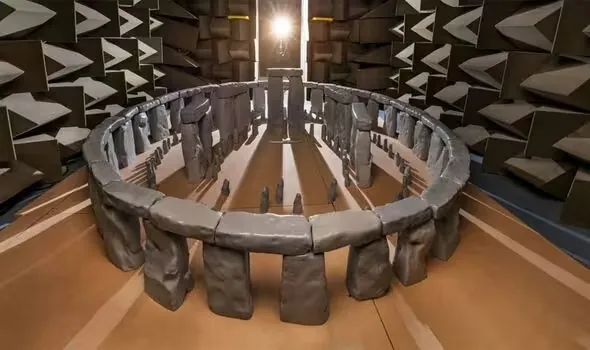
The researchers printed 27 stones of various shapes and sizes. They also used silicone molds, plaster, and other materials to recreate the megalith as accurately as possible.
After that, the scientists placed speakers and microphones at different points of the printed structure and played various sounds from low to high frequencies.
Despite the large gaps between the stones of Stonehenge, the sounds played inside the model remained inside it for some time. This effect would have increased the sound of voices and significantly enhanced the sound of percussion instruments.
The sounds were not reflected inside the circle, and the outer circle of stones actually muffled and scattered the sounds. Thus, scientists believe, Stonehenge could have been used as an acoustic chamber designed to amplify sounds and music during rituals.